
Slime Rebirth: Isekai Awakening Story Mode Guide: How to Clear Acts and What You Earn
Story acts in Slime Rebirth: Isekai Awakening are battles you clear in order to progress the main story. Learn how the recorded Act 1 wave battle plays out, how character switching works, what a clear pays, and what happens on defeat.
Story mode is the main thread of Slime Rebirth: Isekai Awakening. It is built as a series of acts, and clearing those acts in order is how the main story advances — every completed act also pays out rewards and experience for the effort. This guide walks through how an act battle actually plays out wave by wave, what a clear can put in your inventory, and what your options are when a stage goes the wrong way.
Quick answer
Clear story acts in order: clearing acts in sequence is how you progress the main story and earn rewards and experience. One recorded Act 1 clear paid Gems x100, Magicule x1382, Coins x285 and a Rusted Sword at a 3-star rating.
- The recorded Great Jura Forest Act 1 battle ran as sequential waves, tracked on screen by counters like 1/7 WAVE and 2/7 WAVE.
- You control one party character at a time and can switch mid-combat from the party sidebar; your skills swap to whoever you take over.
- A cleared act ends on a VICTORY screen that shows your clear rewards and a star rating.
- If you are defeated, a YOU DIED screen appears with Revive, Retry and Back to Lobby options.
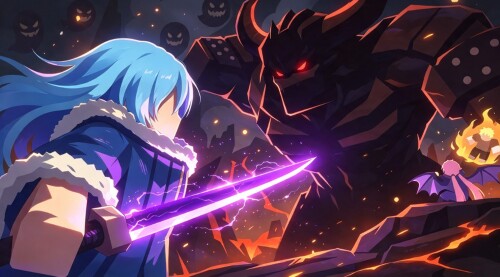
How story acts work
Story acts are cleared in sequence. You work through the main story act by act, and each act you complete progresses the story while granting rewards and experience. That makes story mode the reliable through-line of the game: when you want to know how far you have gotten, your act progress is the measure of it. For the full list of acts, the story acts overview has the breakdown, and the game modes page shows how acts sit alongside the game's other activities.
Inside an act battle: waves and character switching
The recorded Great Jura Forest Act 1 battle plays out against sequential waves of enemies; a wave counter on screen tracks where you are in the fight — it reads things like 1/7 WAVE and then 2/7 WAVE — while HIT and DMG popups show the damage being traded back and forth.
You only control one party character at a time, but you are not locked into that choice. Through the party sidebar you can switch the character you are controlling mid-combat, and your skills swap to match whoever you take over. In a recorded Great Jura Forest Act 1 run, the player handed control from Rimuru Demon Lord to Shuna and then to Gobta without ever leaving the fight.
That switching is the practical lever you hold during an act: changing characters changes the skills you have available, so if a moment calls for a different ability set, the sidebar is where you go. It also means your group composition matters before the act even starts. The party setup guide covers building the group, the character switching page details the mid-fight swap, and the combat controls map the inputs you use once the waves start coming.
Mechanic flow
- 1
Act begins
You enter the act's battle with your party, controlling one character at a time.
- 2
Waves arrive in sequence
In the recorded battle, the on-screen counter ticks up wave by wave — 1/7, 2/7 and so on — as you fight through each group of enemies.
- 3
VICTORY screen
Clearing the final wave ends the act and brings up your clear rewards and star rating.
What a clear pays
Finishing an act opens a VICTORY screen that lists your clear rewards together with a star rating for the run. Reward amounts are not a single fixed payout across the game — the concrete recorded example comes from Great Jura Forest Act 1, which paid the following at a 3-star rating with a playtime of 3:55:
| Reward | Recorded Act 1 clear |
|---|---|
| Gems | x100 |
| Magicule | x1382 |
| Coins | x285 |
| Rusted Sword | x1 |
Treat those numbers as one real example rather than a promise for every act, since reward values can vary from act to act. The Gems, Magicules and Coins from a clear stack onto the same currencies you gather elsewhere — see how to get Gems, how to get Magicules and how to get Coins for the other sources.
If you are defeated mid-stage
Losing a fight does not end your session. When you are defeated during a stage, a "YOU DIED / You were defeated" screen appears with three options on it:
Data table
- Option
- Revive
- What the option is for
- Jump straight back into the fight
- Option
- Retry
- What the option is for
- Start the stage over
- Option
- Back to Lobby
- What the option is for
- Leave for the lobby
Whichever fits the moment, the choice is yours, made on the spot.
Where story mode sits in the bigger loop
The core gameplay of Slime Rebirth: Isekai Awakening revolves around completing the main story, obtaining new characters and leveling them up — and clearing story acts is the "completing the main story" part of that loop. The resources you gather along the way, from story and from dungeons, are used to craft equipment, and equipping that gear is what makes your characters stronger. Each act clear therefore does double duty: it advances the story and stocks the materials that feed into crafting.
The rest of the loop connects directly. New characters come from their own routes, covered in the how to get characters guide, and leveling them up is its own process, detailed in the character leveling page. If you are just starting out, the beginner guide walks the early game end to end, while the farming guide and progression guide cover the routines that keep your team growing alongside your act progress.
Related Guides
Story Acts: What to Clear Next
Acts clear in order: the confirmed Great Jura Forest ACT 1, the wave counter, and what an act clear pays.
How to Switch Characters in Combat
The party sidebar swap shown working in combat, the 1, 2, 3 keys, and what switching does to your skills.
Beginner Guide: First Session Plan
A step-by-step first session: starter Geld, controls to learn, Act 1 clear, rewards to claim and the reinvest loop.